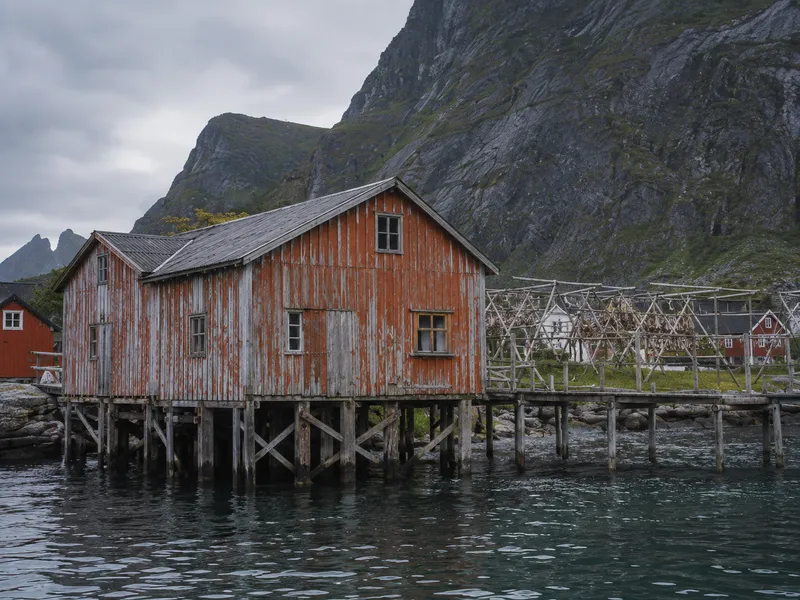
Henningsvær · Lofoten
Sjøhuset Rå
Three generations of stockfish, eleven seats, and a cook who refuses to serve anything caught more than a day ago.
Read the story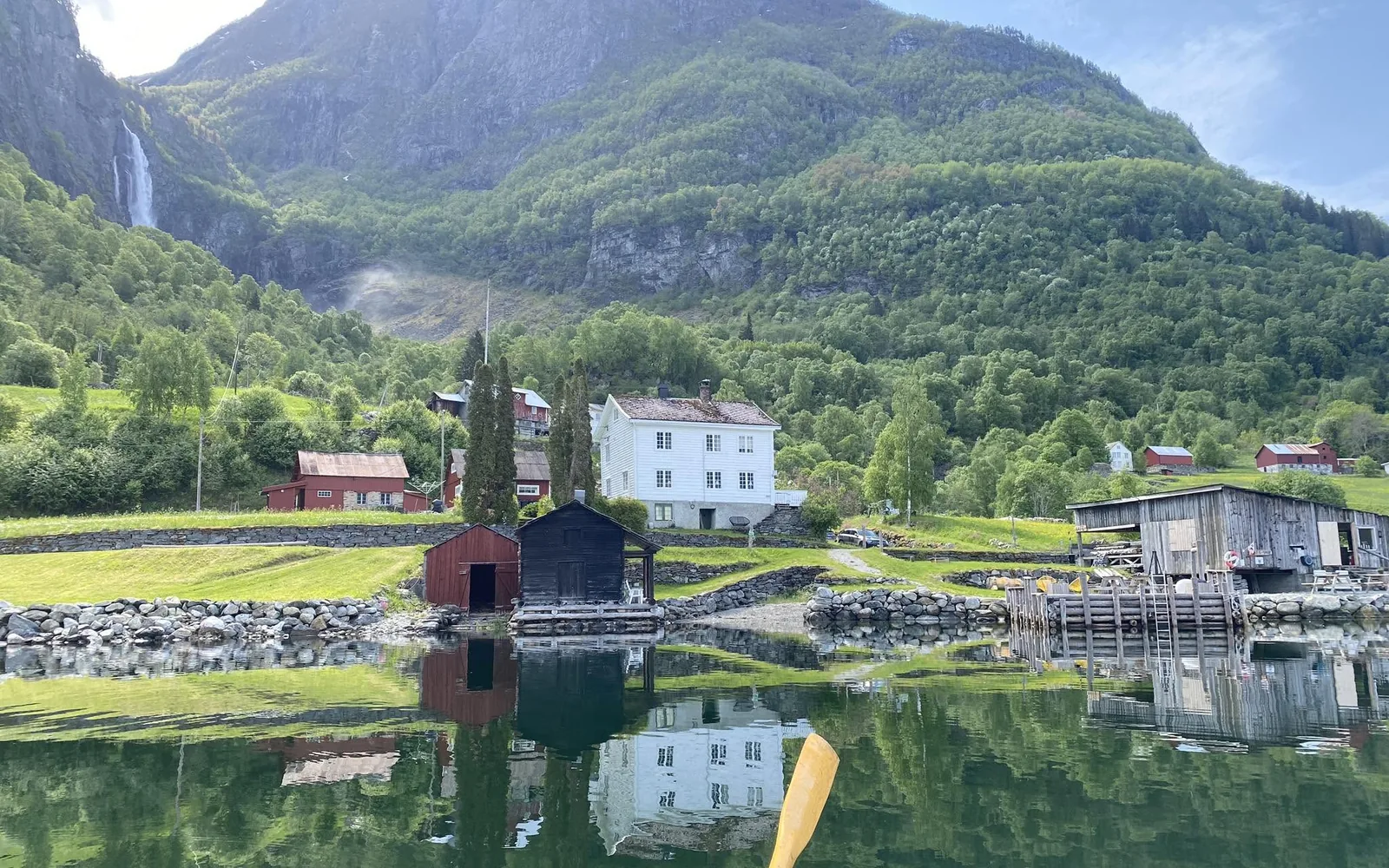
Taste Norway Selected · Feigum, Luster
Feigefossen falls 218 metres in one drop. That water drove the saw blades here for centuries – until the buildings were almost lost, and the boy who grew up beneath them bought them back.
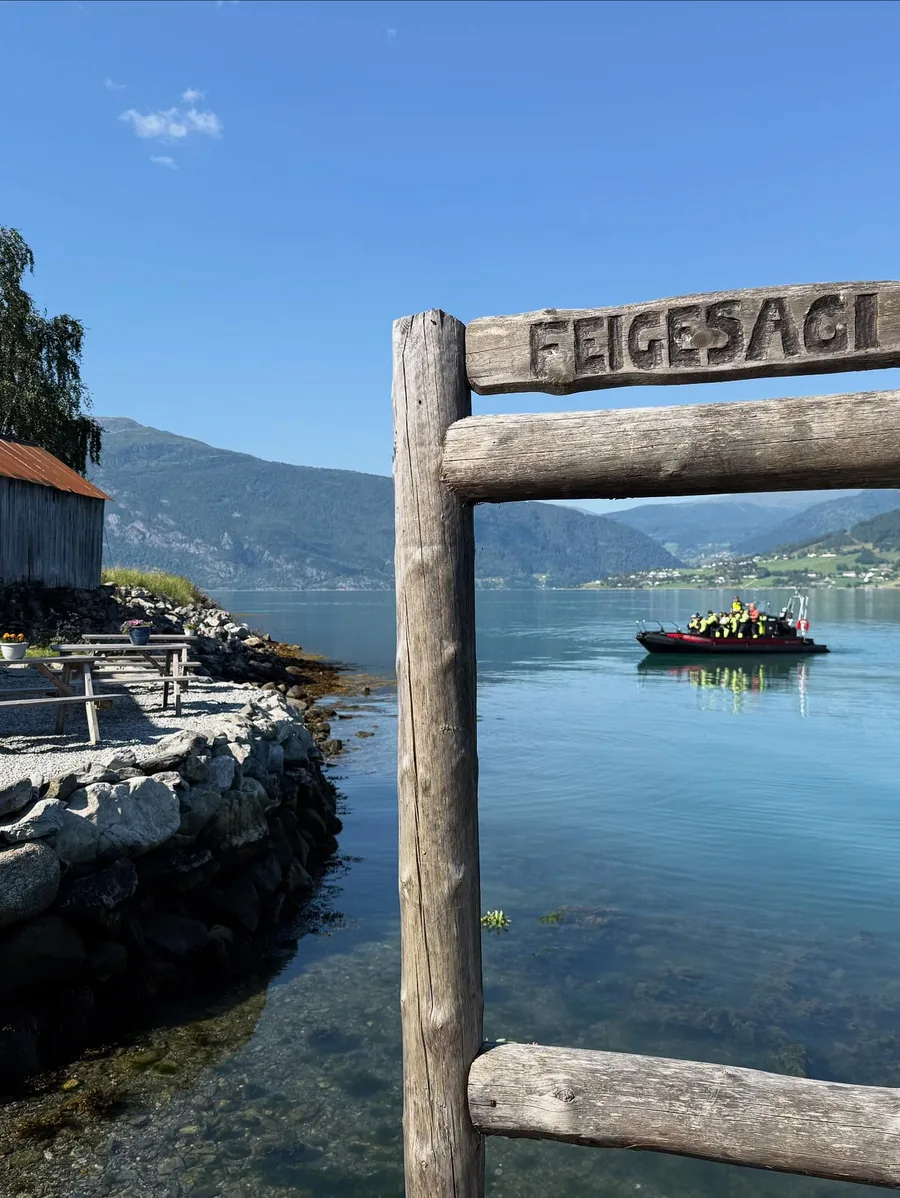
Feigesagi, Feigum in Luster.
Feigefossen drops 218 metres into Lustrafjorden in a single fall. The same water that has drawn painters for centuries – Hans Gude among them – turned the saw blades and mill wheels at Feigum from the 1700s onwards.
A hundred metres below the sawmill, on the south side of the fjord, Kjell Feigum grew up.
From the age of four he was underfoot among the old buildings on the farm where he lived: the mill, the forge, the sawmill, the byre. The sawmill was his nearest neighbour. As a boy he was already helping to carry away the offcuts.
The place was the whole of his world. It worked, it was complete, and it was alive.
When Kjell grew up and left Feigum, the buildings began to go. Year after year they fell further. By the time he came back as an older man the place was close to dead, and the valuation recommended pulling most of it down.
Kjell and his family bought the old industrial site and restored it themselves, over years of unpaid work. Feigum today is close to identical to photographs taken in the 1950s, when Kjell was a boy there.
I care a great deal that my children and grandchildren understand how life used to be. If they wanted an axe, they had to forge it. If they wanted flour, they had to sow the grain, harvest it and grind it.
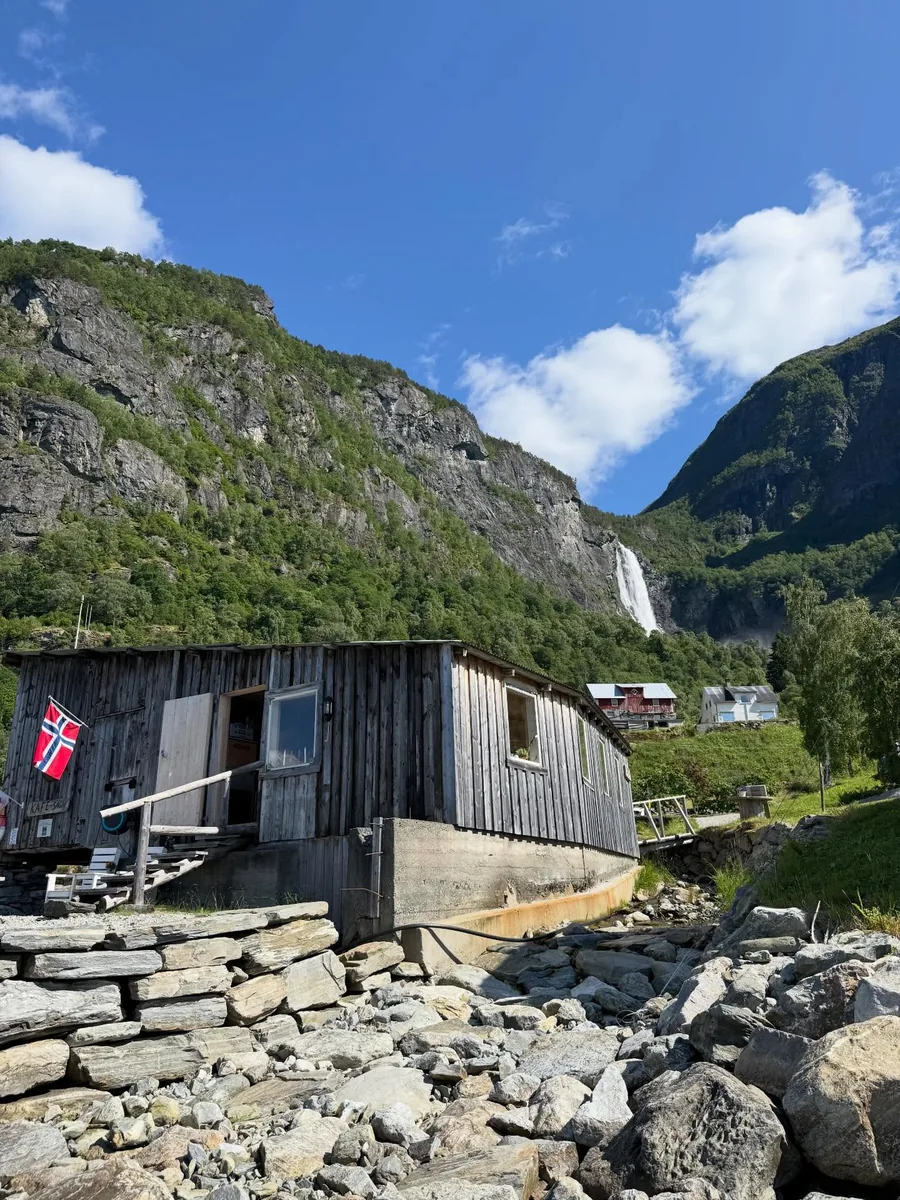
Today you drive the Romantic Road along Lustrafjorden and stop at Feigesagi. Anne Merethe Feigum, Kjell’s daughter, runs the café with her mother Marit. A small café in the old sawmill. Waffles, ice cream, coffee, juice made locally. The fjord in front, the waterfall across it.
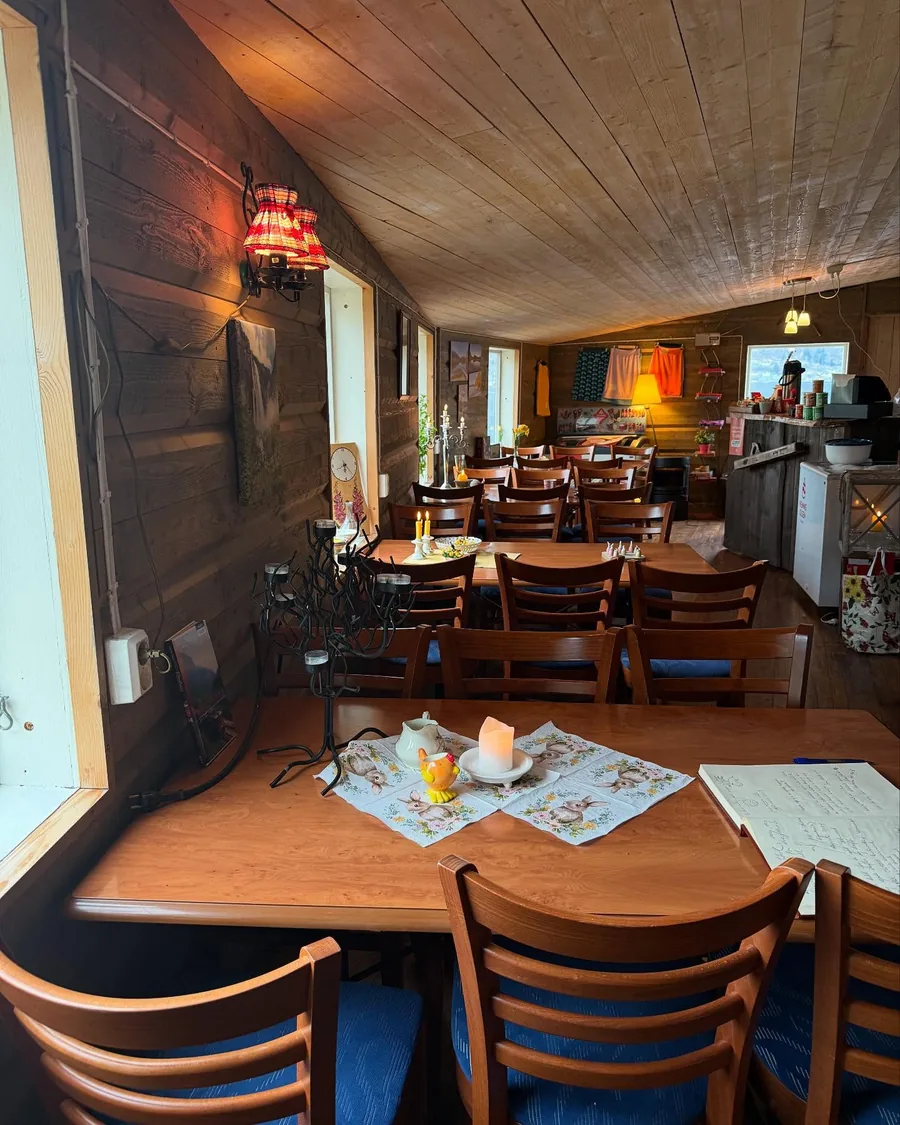
From the café you can start the climb to the foot of the waterfall – about 45 minutes on a stony path. Few of the people who make that walk know that the place they rested, where they ate the waffle, is where a whole community’s craft was once stored in the power of the water they are walking towards.
A working industrial site brought back by the family who grew up in it, not a heritage centre built for visitors.
Mill, forge and sawmill driven by a 218-metre waterfall, saved from demolition and rebuilt to match photographs from the 1950s.
Restored with traditional methods over years, rather than rebuilt quickly in modern materials.
A café inside the sawmill itself, at the foot of the path to Feigefossen.
Three generations of one family keep the place open, and the people who rebuilt it are the ones who serve you.
Practical
Taste Norway takes no commission on visits arranged directly with the place.
More stories
Henningsvær · Lofoten
Three generations of stockfish, eleven seats, and a cook who refuses to serve anything caught more than a day ago.
Read the story
Røros · Trøndelag
A summer dairy 700 metres up, where the butter still changes colour with the season.
Read the story
Ulvik · Hardanger
Fourth-generation cider from an orchard on a 30-degree slope. The press is from 1954.
Read the story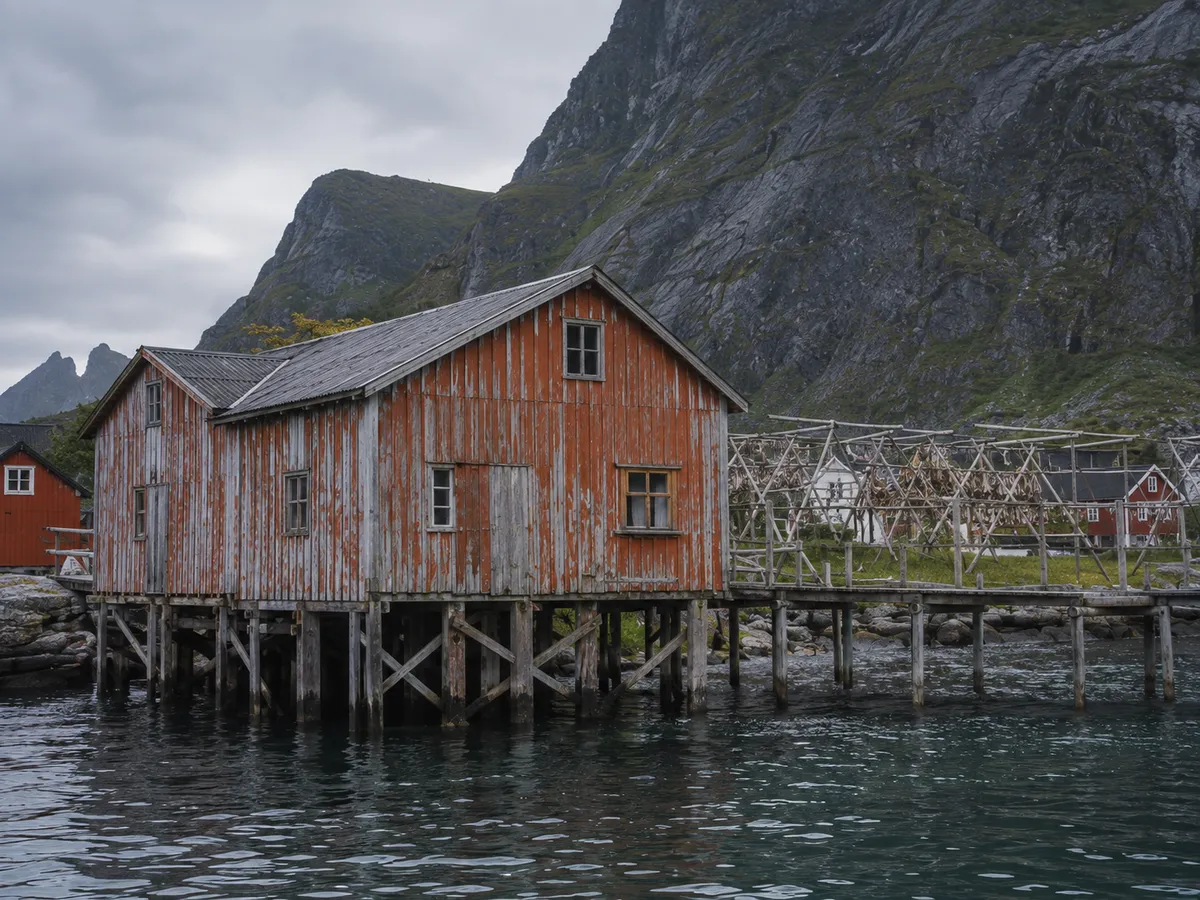
Next story · Henningsvær, Lofoten